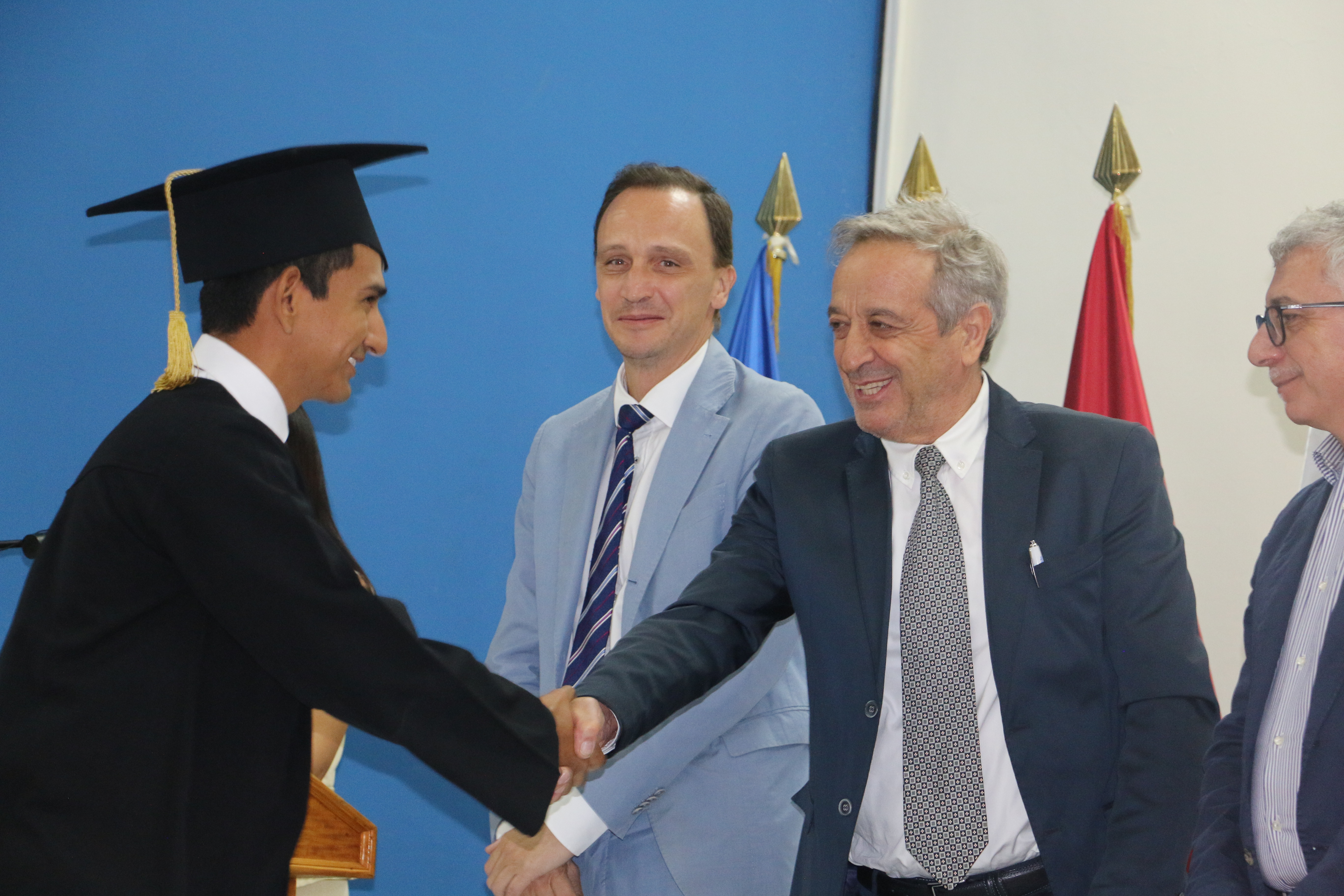
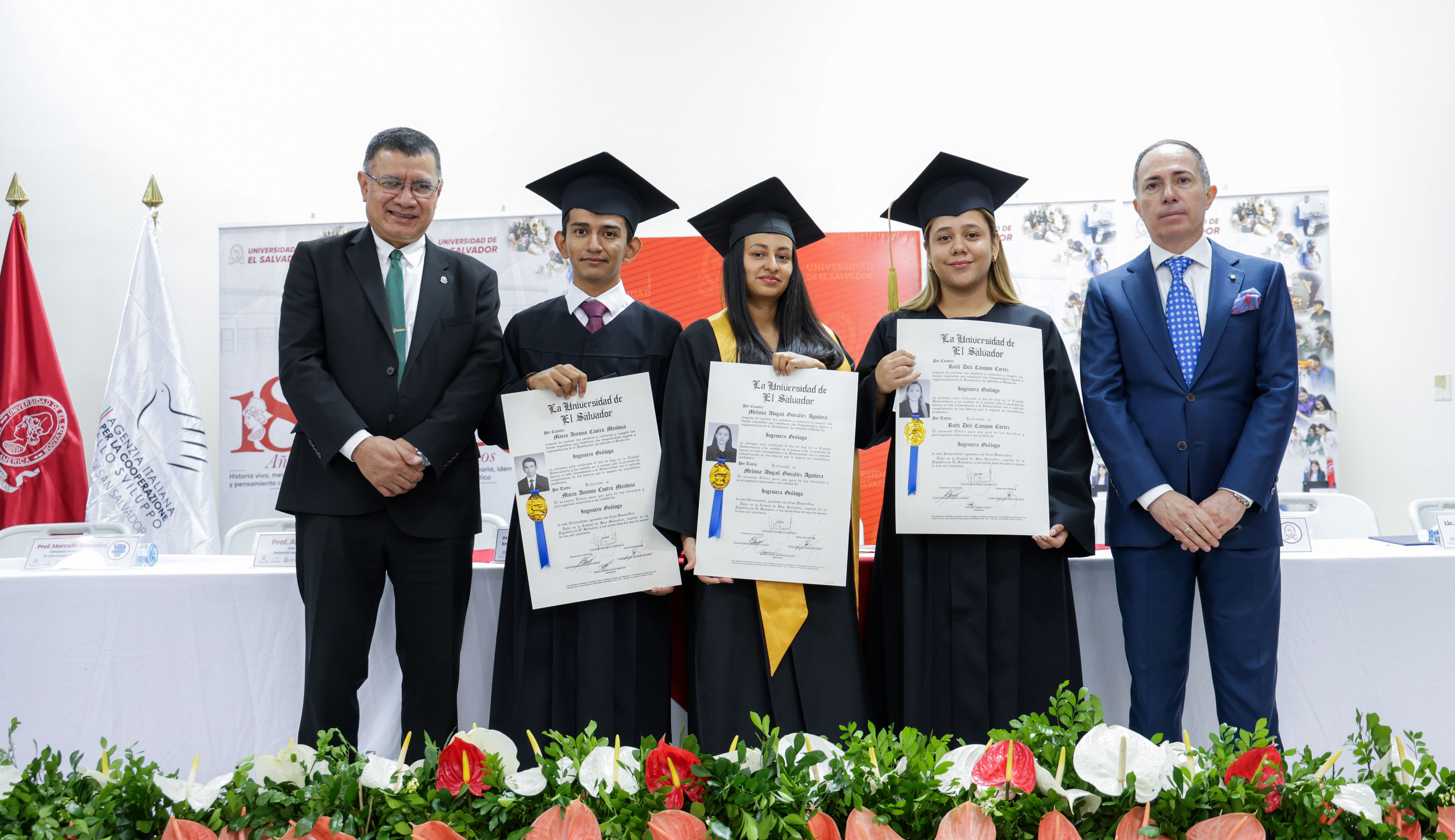
On March 20, 2026, at the University of El Salvador (UES), the country celebrated its first-ever graduation in Geological Engineering. On this occasion, two female geological engineers and one male geological engineer earned their degrees, marking a historic milestone for academic and scientific development in El Salvador.
This achievement was made possible thanks to the CASTES project, funded by the Italian Ministry of Foreign Affairs and International Cooperation (MAECI) through the Italian Embassy in El Salvador and the Italian Agency for Development Cooperation (AICS).
The project, valued at €1,480,000, is implemented by the Italian universities of Palermo (UNIPA) and “G. d’Annunzio” University of Chieti-Pescara (UNICH), in collaboration with UES, with the aim of strengthening national expertise in geology, natural hazard assessment, and sustainable land management.
El Salvador is among the Central American countries most exposed to natural phenomena such as earthquakes, volcanic activity, landslides, and floods—recurring events that can have very serious consequences. Despite this high level of vulnerability, until 2021 the country did not have a university program capable of training professionals to study these risks and contribute to safer urban development planning.
The Salvadoran community of geology experts is still very small, consisting of about 25 specialists, many of whom had to complete their education abroad due to the absence of a dedicated academic program in the country. Thanks to the CASTES project, the first degree program in Geological Engineering was established, now attended by around 65 students. The project has also enabled advanced training for faculty members—through Master’s degrees, PhDs, and professional development courses carried out in Italy—as well as the creation of a modern Geosciences Laboratory equipped with tools for lithological analysis, seismological and volcanological studies, hydrogeological research, and field activities.
The first graduation ceremony therefore represents a fundamental step toward building a new generation of professionals capable of contributing to the reduction of natural risks and to the sustainable development of El Salvador, while also strengthening scientific and academic cooperation between Italy and Central America.