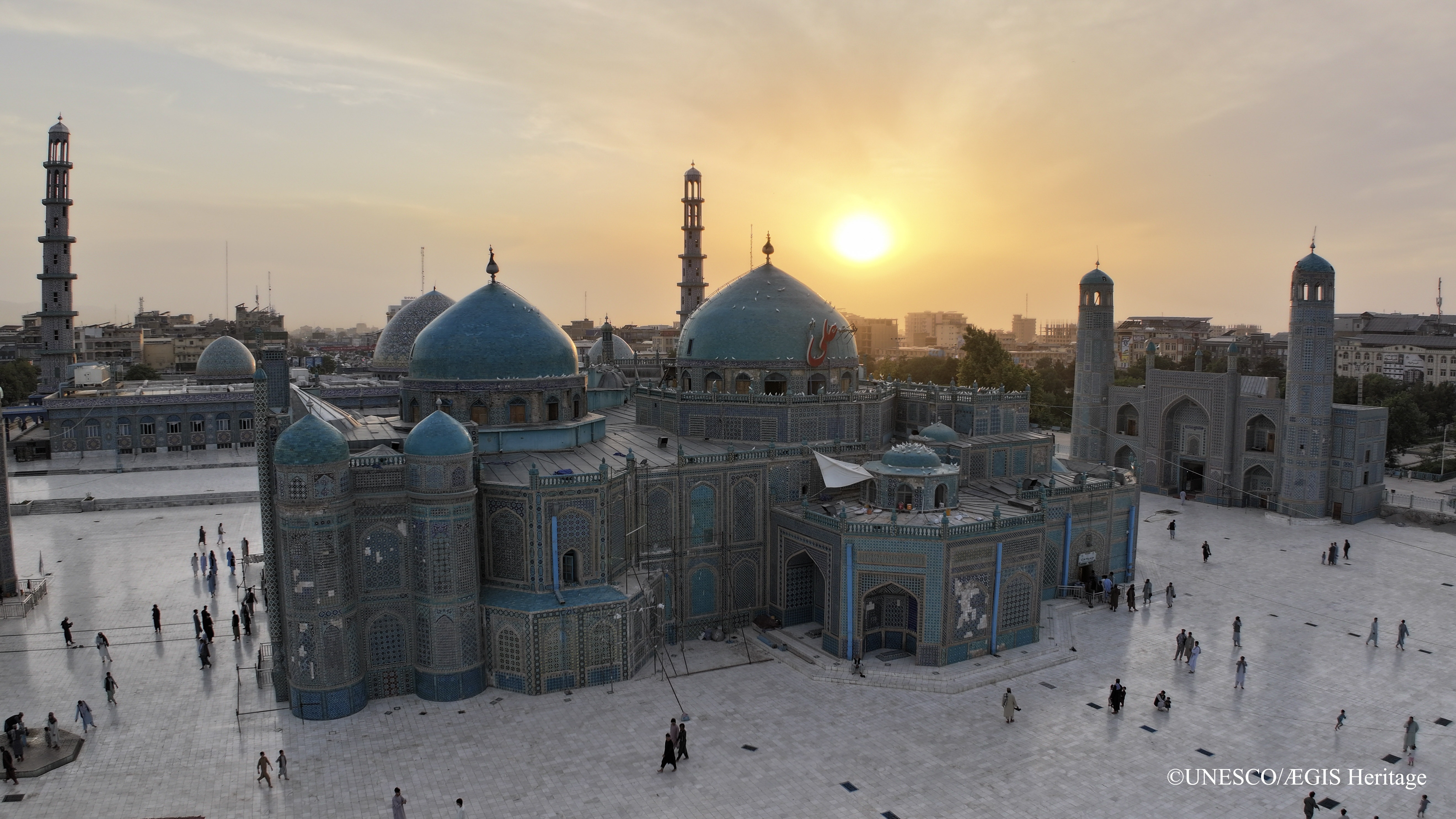
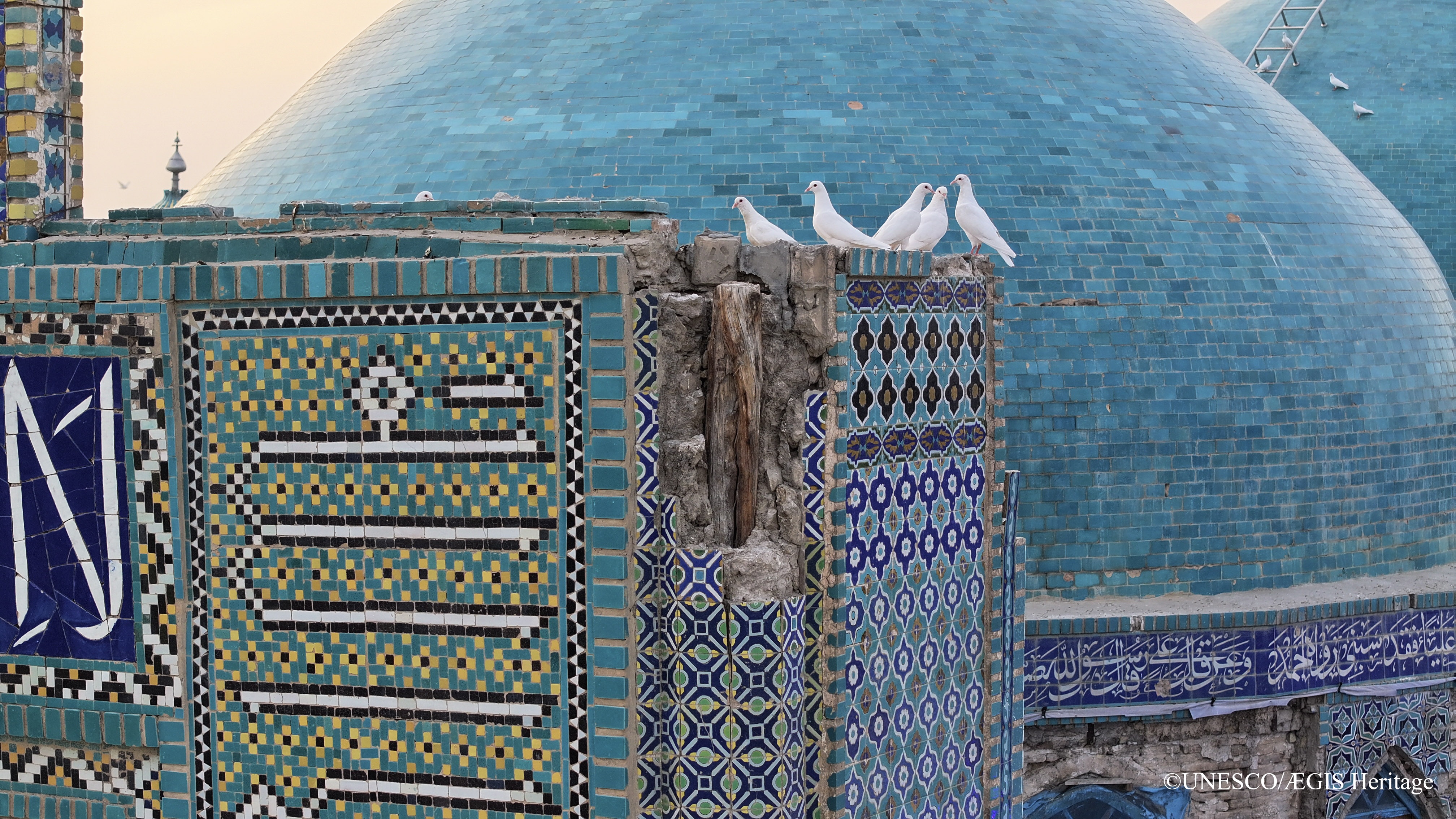
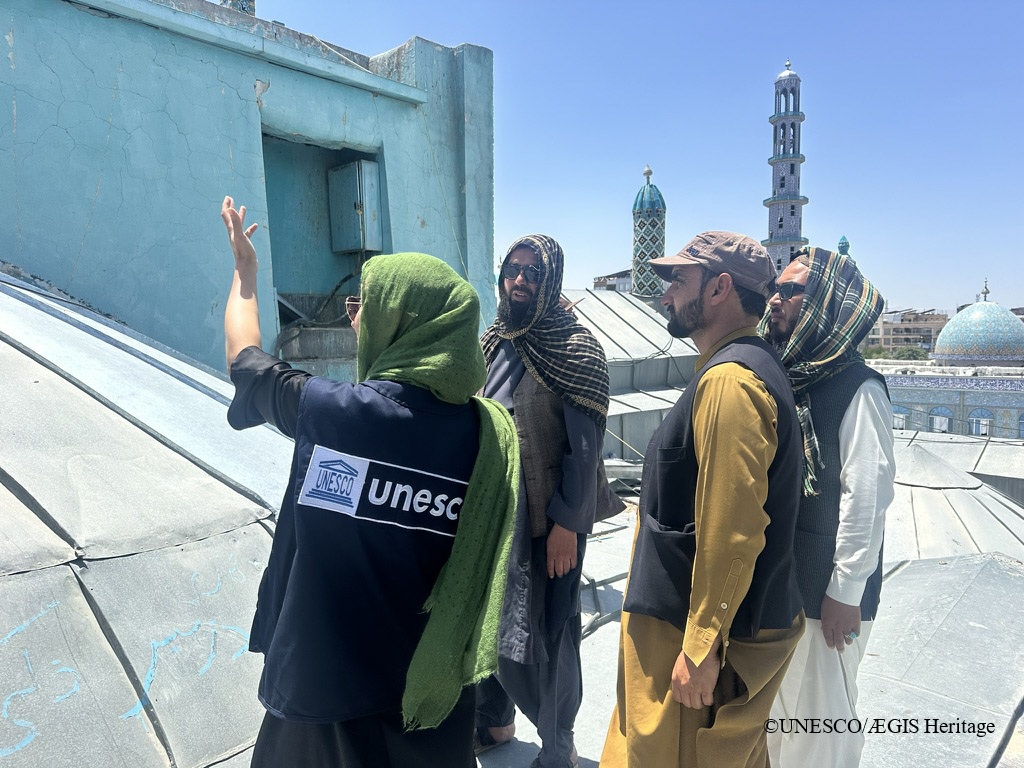
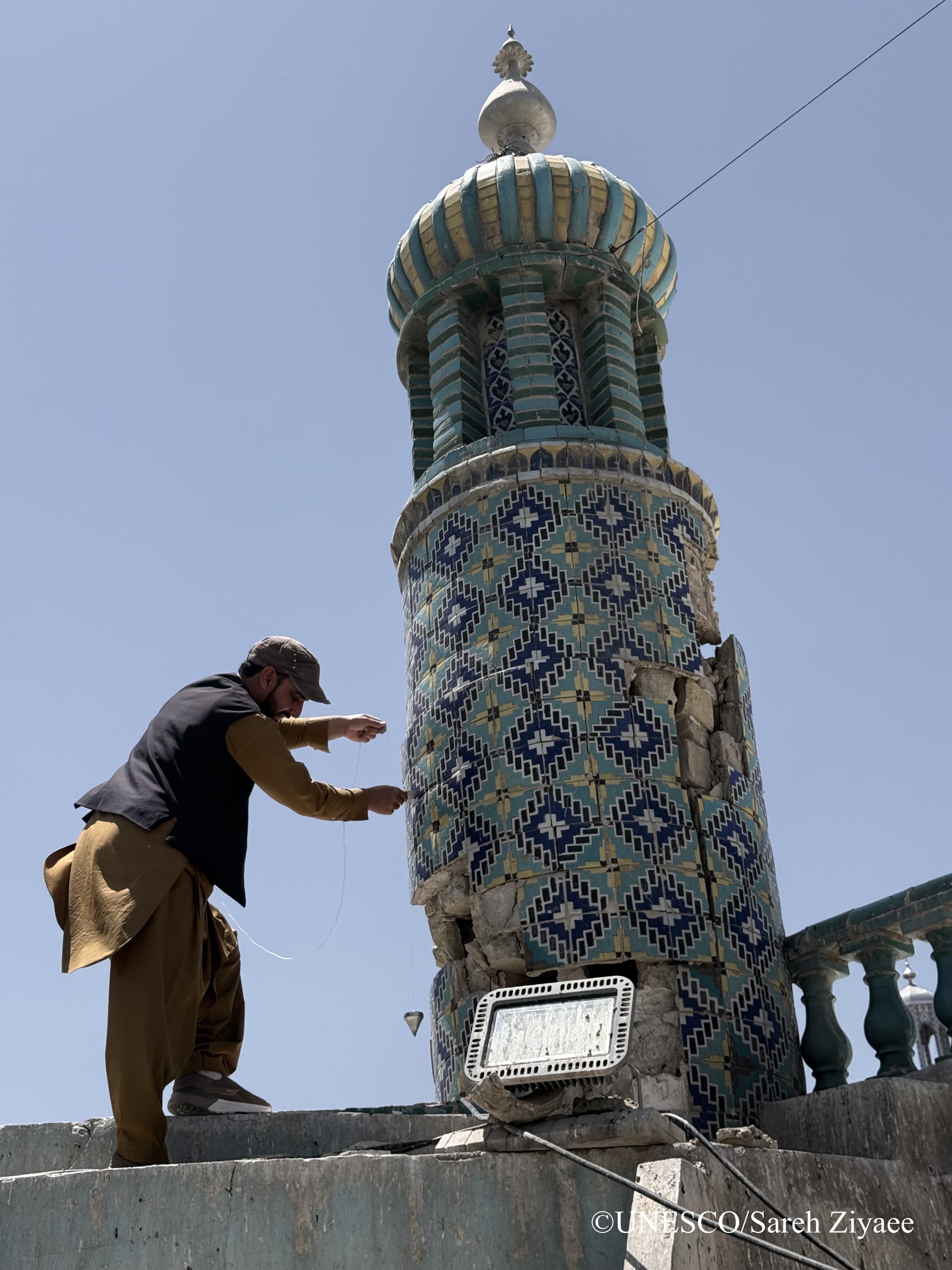
On 3 November 2025, a powerful magnitude 6.3 earthquake struck Afghanistan’s Balkh Province, with its epicenter near Mazar-i-Sharif. The disaster claimed 26 lives, injured approximately 1,200 people, displaced thousands of residents, and destroyed more than 1,300 homes, further exacerbating the socio-economic conditions of local communities. The earthquake also caused significant damage to several historic buildings in the city, including the Shrine of Hazrat Ali, widely known as the Blue Mosque, one of the most important religious monuments for the Afghan people. Technical assessments conducted by UNESCO identified widespread structural damage, with damage to the roofs and minarets, detachment and breakage of ceramic tiles, highlighting the urgent need for structural stabilization and conservation interventions to preserve the monument’s outstanding cultural, religious and identity value while ensuring the safety of worshippers and visitors.
To respond to this emergency, the Ministry of Foreign Affairs and International Cooperation, through the Italian Agency for Development Cooperation (AICS), in collaboration with UNESCO, decided to support the community of Mazar-i-Sharif and undertake conservation works at the Blue Mosque within the framework of the project “Conservation and Enhancement of the Bamiyan Valley for Culture-Oriented Sustainable Development” (AID 11704/01/1). The project aims to strengthen the operational framework for the safeguarding and management of the cultural heritage of the Bamiyan Valley, a UNESCO World Heritage Site since 2003, while contributing to the socio-economic development of local communities.
To this end, the successful model already implemented in the Bamiyan Valley will be replicated in Mazar-i-Sharif, integrating cultural heritage safeguarding and conservation with skills development and employment opportunities in the cultural and tourism sectors. The planned activities include on-the-job training for local workers and technicians, supported by Italian conservation professionals, the implementation of specialized technical investigations, and the execution of structural stabilization, emergency safeguarding and conservation works at the Blue Mosque. The interventions will be carried out through a cash-for-work program involving 70 local workers, complemented by continuous monitoring and technical supervision to ensure quality control and compliance with international conservation standards. In addition, training programs and creative workshops will be provided for 70 women in the fields of cultural heritage, handicrafts, and services related to archaeological and religious tourism. These activities will follow a “women for women” approach, creating new income-generating opportunities and promoting local women’s entrepreneurship.
Through this project, Italy and UNESCO promote a model that integrates the stabilization works and conservation of the Blue Mosque with vocational training, women’s empowerment, and the creation of employment opportunities in the cultural and tourism sectors. This approach will not only strengthen the skills and economic opportunities of the local community, but will also restore the monument complex to worshippers and visitors, preserving its role as a symbol of the cultural and religious identity of the Afghan people.