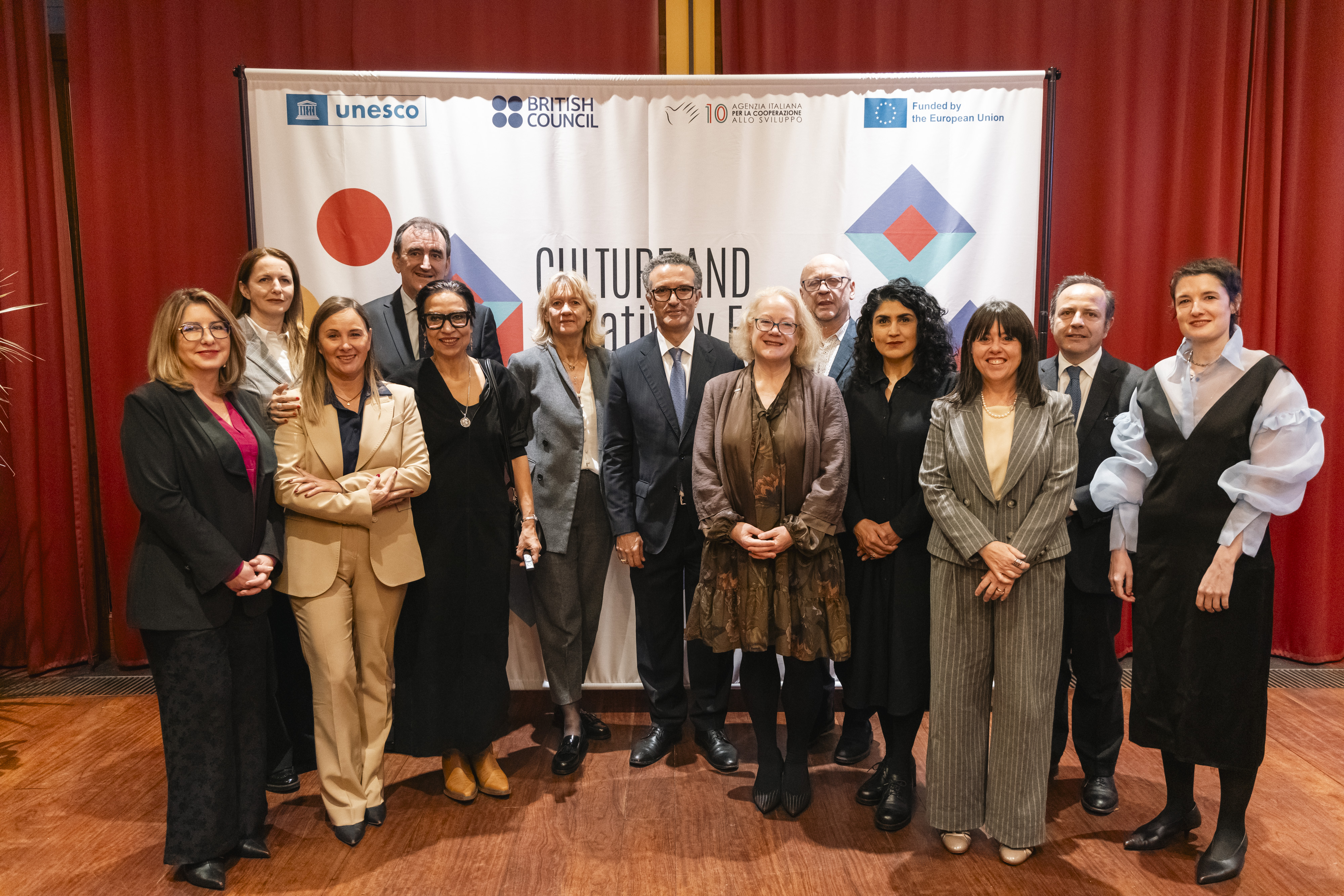
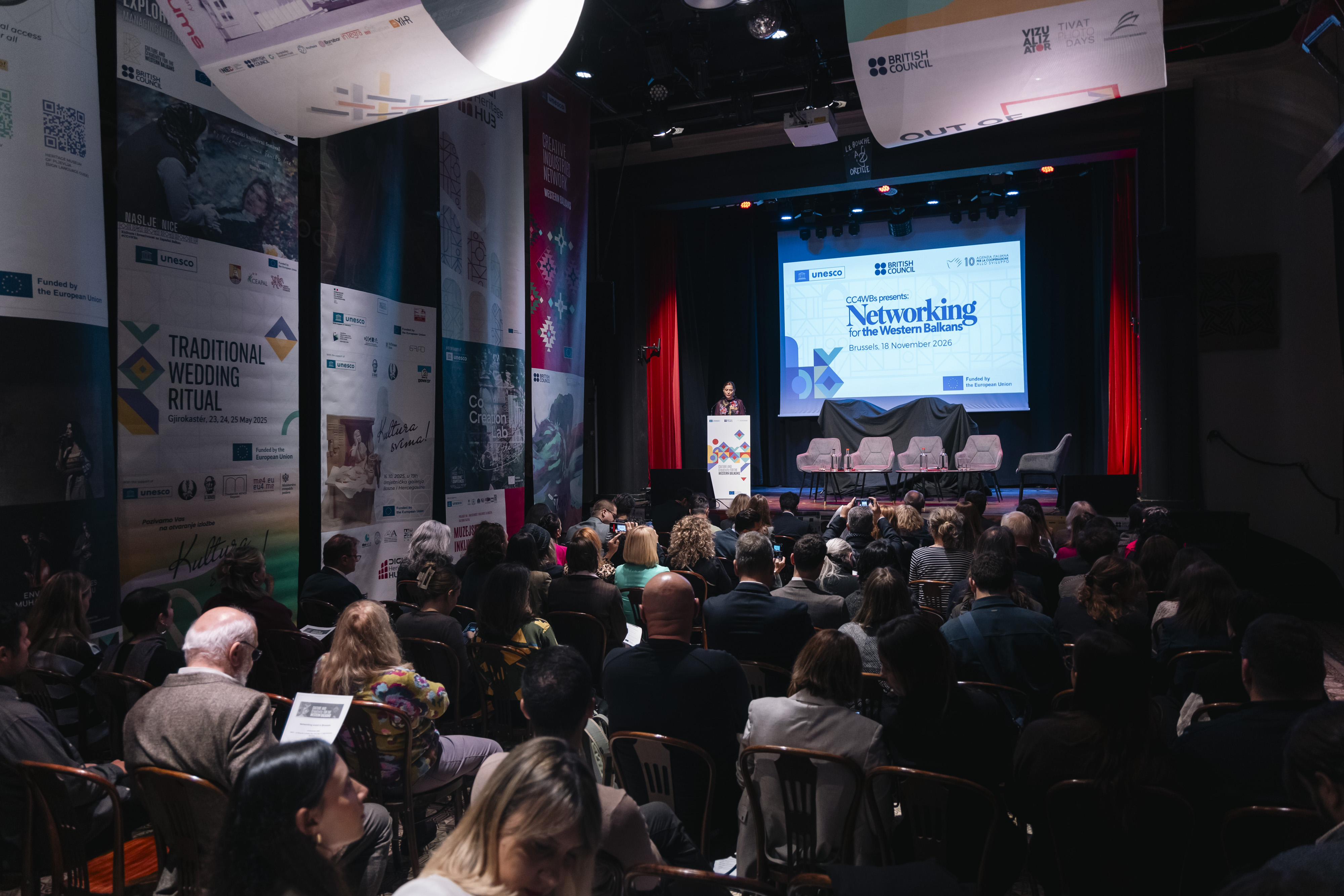
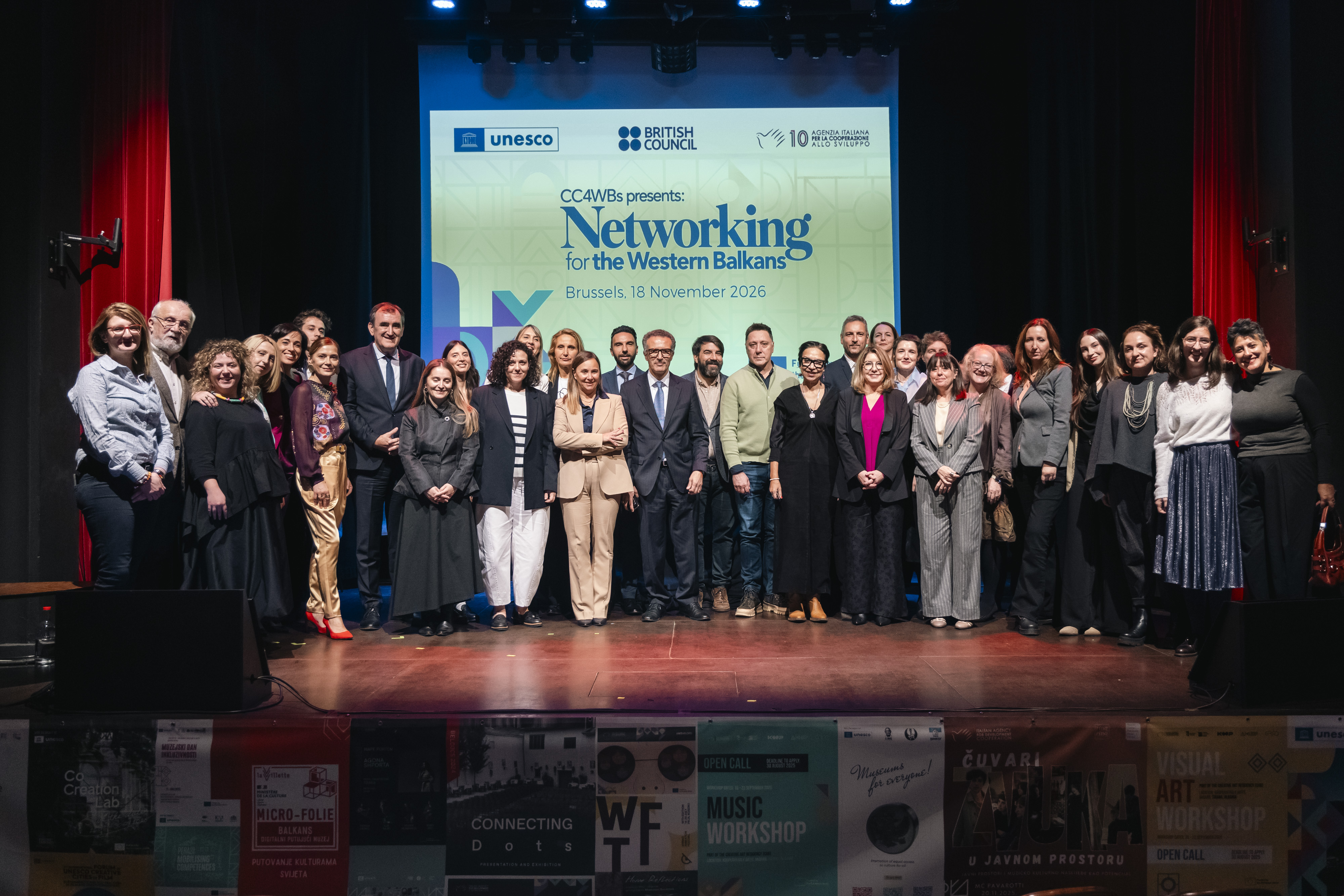
A closing event for the Culture and Creativity for the Western Balkans (CC4WBs) programme, which helped strengthen the region’s cultural and creative sectors by creating new opportunities for artists, cultural organisations and creative professionals while bringing the region closer to Europe, was organised yesterday in Brussels. The €8 million programme was funded by the European Union and implemented by UNESCO, the British Council and the Italian Agency for Development Cooperation (AICS).
The CC4WBs programme supported more than 300 initiatives, nearly 500 events and 106 mobility activities facilitating the travels of artists and cultural operators. It reached over one million citizens and audience members with 26,000 direct beneficiaries, including 4,822 young people, 3,039 artists, 1,436 representatives of the cultural and creative industries and 1,320 students across the Western Balkans.
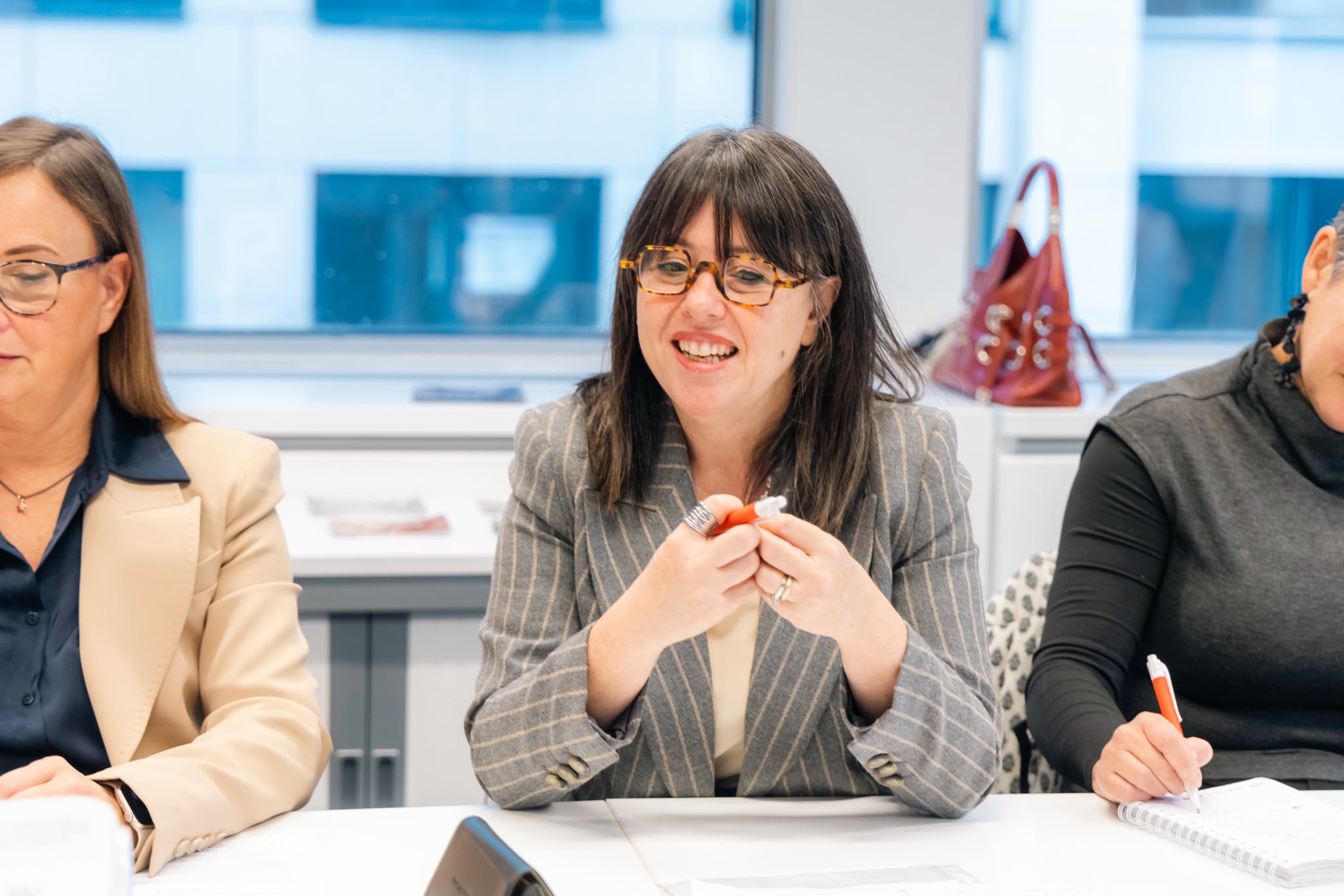
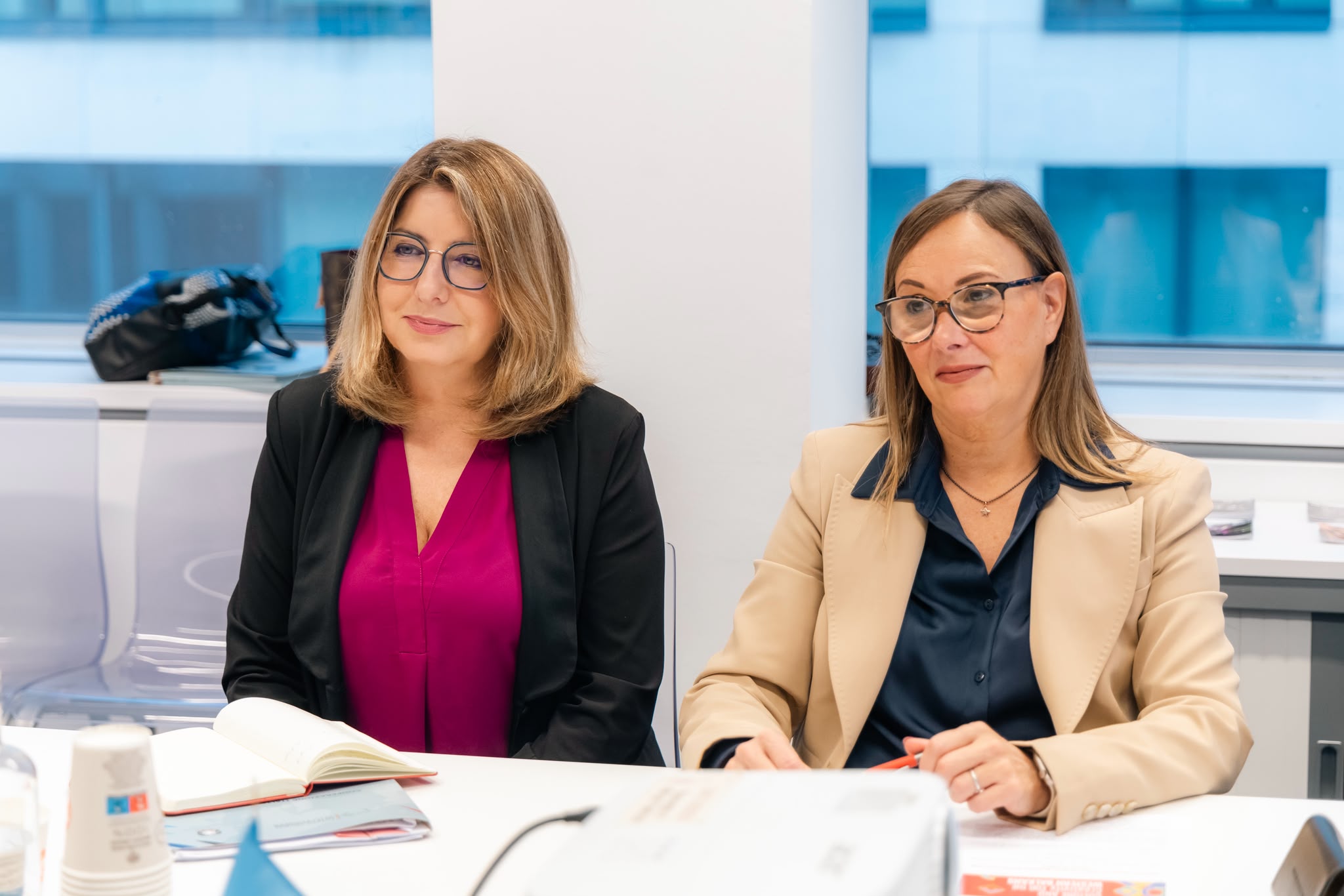
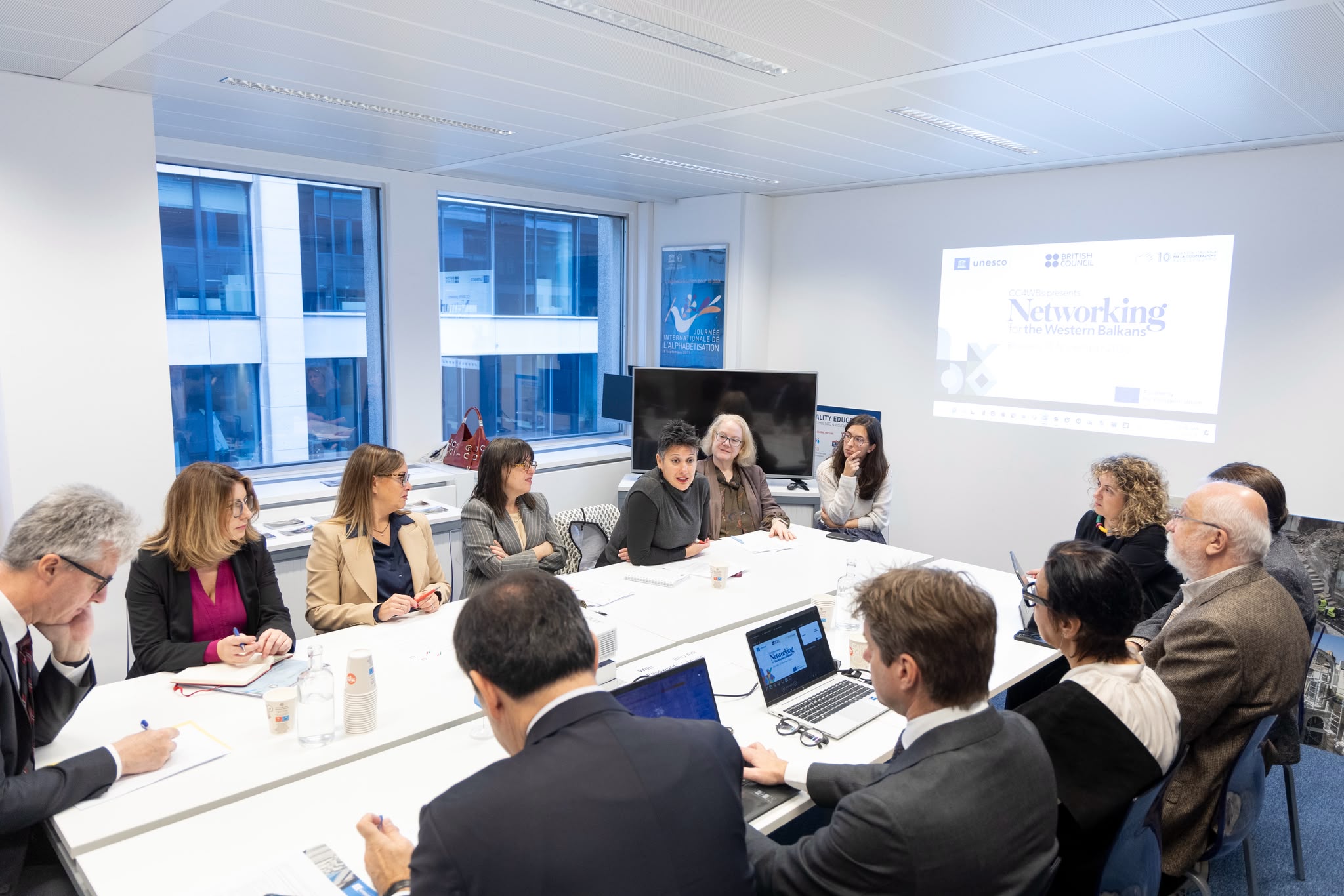
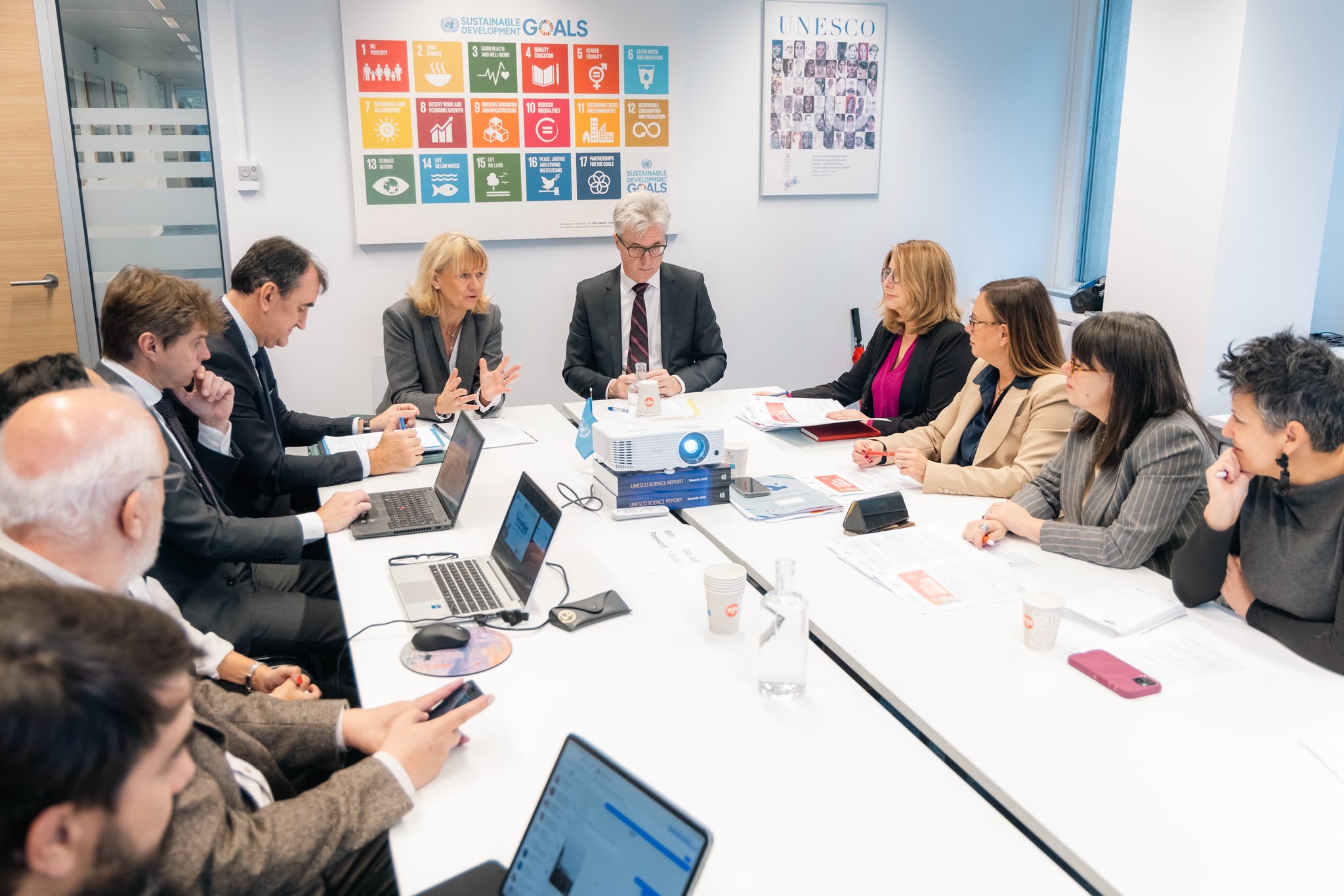
Bringing together representatives of the European Commission, UNESCO, the British Council and AICS, alongside programme beneficiaries, the closing event in Brussels, Belgium, explored the contribution of culture to European integration, sustainable economic development, regional cooperation and social cohesion.
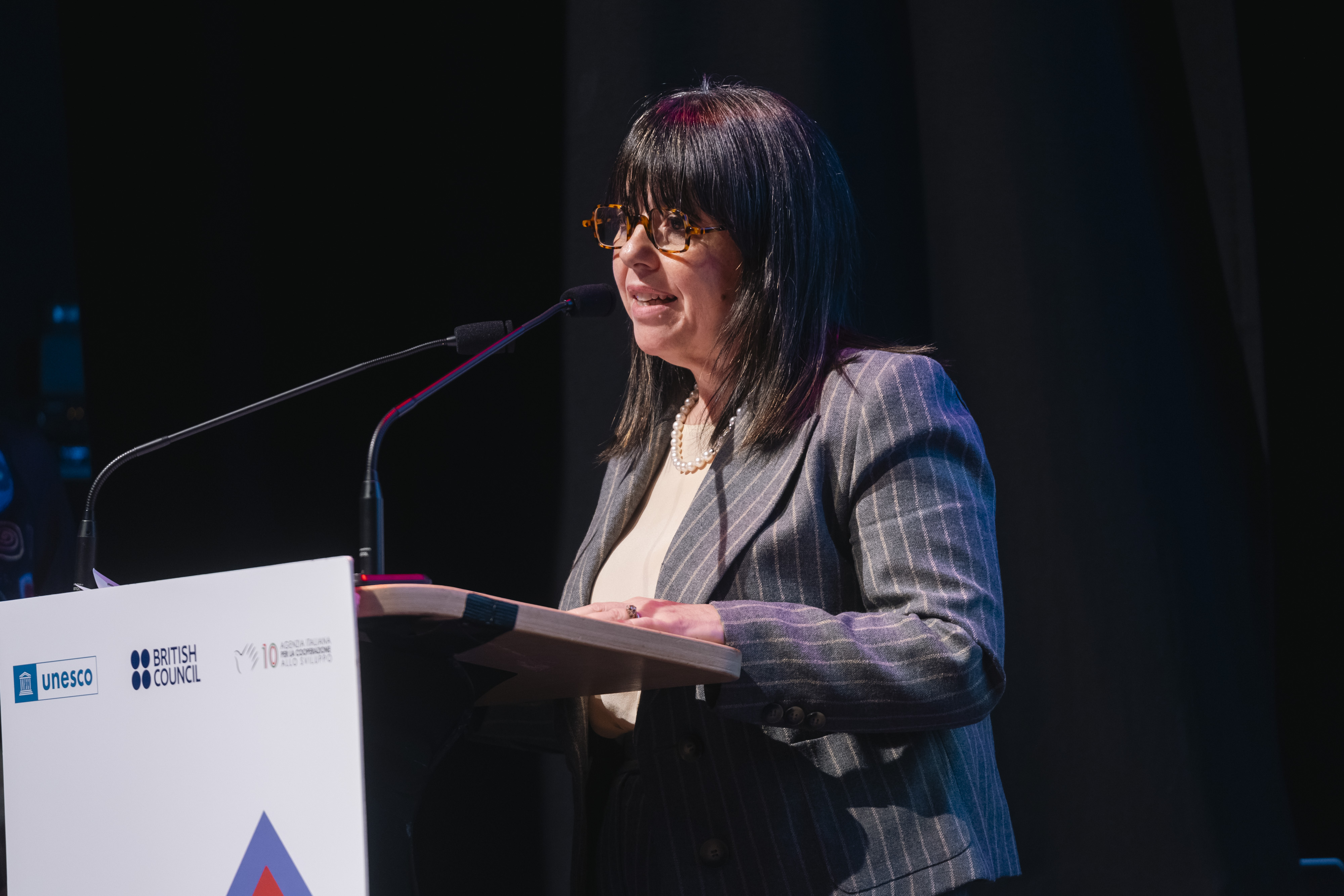
Georg Häusler, Director for Culture, Creativity and Sport at the European Commission’s Directorate-General for Education, Youth, Sport and Culture (DG EAC), stated: ‘Culture and Creativity for the Western Balkans’ project, the EU has strengthened the region’s cultural and creative sectors and helped build lasting partnerships across borders, partnerships that bring communities closer together and support good neighbourly relations. I congratulate the more than 200 grantees, and our partners UNESCO, the British Council and the Italian Agency for Development Cooperation, on what they have achieved. The project ends, but our commitment to culture in the enlargement region remains firm. In 2027, we plan to launch a dedicated EUR 5 million call under the Creative Europe programme for our enlargement and neighbourhood partners, and to hold a High-Level Dialogue on Culture with enlargement partners.
Launched in April 2022, the programme covered a wide range of fields, including performing and visual arts, audiovisual and interactive media, cultural heritage, cultural tourism, design, and creative services. Particular emphasis was placed on enhancing professional and organisational capacities, mobility of artists, international partnerships and access to finance.
Nayef Al-Fayez, UNESCO Assistant Director-General for Culture, highlighted the strategic role of culture in peacebuilding: “Culture plants a seed of peace in people’s minds. It drives social cohesion, inclusion, democratic development and sustainable economic growth. CC4WBs has shown what can be achieved through strong partnerships built on a shared vision and commitment to culture. As the programme comes to a close, we must ensure that the people of the Western Balkans continue to leverage the opportunities and momentum generated by the numerous activities on the ground.”
Beyond its contribution to cultural life, the programme has helped lay the foundations for a stronger regional creative economy, opening up new opportunities for employment, entrepreneurship and international cooperation.
Eilidh Hamilton, British Council Director Western Balkans, emphasised the importance of investing in people and organisations as the foundation of a sustainable creative economy: “The true potential of the Western Balkans’ cultural and creative sectors lies in the talent, ambition and creativity of its people. Through the EU-funded Culture and Creativity for the Western Balkans programme, the British Council has focused on empowering creative professionals and strengthening the capacity of cultural organisations to innovate, adapt and thrive. By equipping people and organisations with the skills, knowledge and confidence to shape their own future, we are helping to unlock the region’s creative potential and lay the foundations for a stronger, more dynamic and sustainable creative economy.”
Grazia Sgarra, Director of the AICS Rome Office for Civil Society Organisations, Partnership and Finance for Development, highlighted culture’s contribution to sustainable development: “Culture is much more than the preservation of shared heritage. It is a resource for economic opportunity, social inclusion and dialogue between communities. Investing in people’s skills, creativity and capacity to innovate is essential for sustainable development. CC4WBs demonstrates how international cooperation can help unlock this potential and create opportunities across the region.”
As the programme approaches its official conclusion in March 2027, a key priority is to sustain its achievements, maintain the partnerships established and create the conditions for cultural organisations and creative professionals across the Western Balkans to continue developing their work.
The event concluded with a performance by HELEM NEJSE, a Sarajevo-based musical collective, bringing the energy of the Western Balkans’ contemporary creative scene to the European capital.