Global Citizenship Education (GCE)

Within the national regulatory framework, Law No. 125/2014 on General Provisions Governing International Cooperation for Development recognises Global Citizenship Education as one of the objectives of International Cooperation and Sustainable Development, as stated in Article 1, paragraph 4: “Italy promotes education, awareness-raising and the participation of all citizens in international solidarity, international cooperation and sustainable development.

Reading time:

1 min

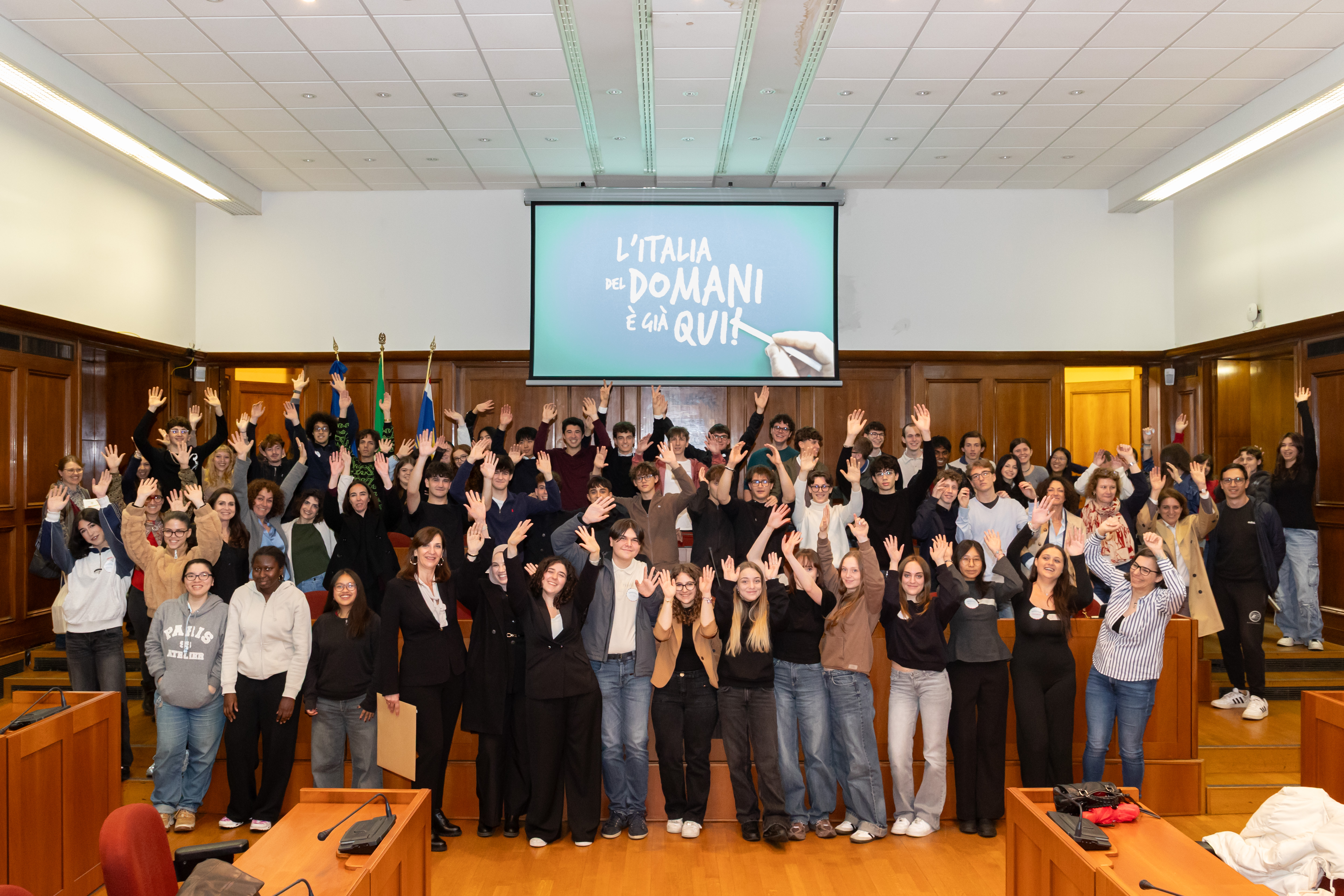
Mase Raccogliamo le Idee Milano © Francesco Vignali

Italy is committed, both nationally and internationally, to achieve the Sustainable Development Goals, a commitment set out in the adoption of Resolution A/RES/70/1, through which the General Assembly adopted the following document in 2015: “Transforming Our World: The 2030 Agenda for Sustainable Development”, which represents a call for action for people, the planet and prosperity aimed at strengthening universal peace. Global Citizenship Education (hereinafter GCE) therefore finds its natural framework in the 2030 Agenda, and specifically in Goal 4, Target 4.7, which recognises its fundamental role in ensuring that individuals and communities take full ownership of their responsibilities in the process of change.

Within the national regulatory framework,  Law. No. 125/2014 on General Provisions Governing International Cooperation for Development recognises Global Citizenship Education as one of the aims of International Cooperation and Sustainable Development, stating at Article 1, paragraph 4: “Italy promotes education, awareness-raising and the participation of all citizens in international solidarity, international cooperation and sustainable development”.


Action Framework

At European level, starting from the 2004 Joint Report by the Council and the Commission on the ‘Education and Training 2010′ work programme (2004/C 104/01) and subsequently the 2006 Recommendation of the European Parliament and of the Council (2006/962/EC) and the 2018 Council Recommendation (2018/C 189/01) on key competences for lifelong learning, the right of every person to high-quality education, training and inclusive lifelong learning has been highlighted, with the purpose of maintaining and acquiring competences – a combination of knowledge, skills and attitudes.

UNESCO, the United Nations Educational, Scientific and Cultural Organisation, places education at the heart of its mission and identifies Global Citizenship Education (GCED) as the approach and the ‘tool’ for fighting human rights violations, inequalities and poverty that still characterise our society. UNESCO defines GCED as an educational process that encourages people to commit to bringing about change in the social, cultural, political and economic structures that influence their lives, thereby becoming active promoters of more peaceful, tolerant, inclusive, safe and sustainable societies.

In 2023, UNESCO adopted the new Recommendation concerning Education for International Understanding, Cooperation and Peace and Education relating to Human Rights and Fundamental Freedoms, following lengthy negotiations that began after the 41st UNESCO General Conference in 2021 decided to update the previous 1974 Recommendation on Education for Peace.

At national level, work began in 2017 on the development of the National Strategy for Global Citizenship Education (GCE), which serves as the reference document for GCE in Italy. In line with the international framework, the GCE Strategy adopts the definition implemented by UNESCO, defining GCE as ‘an educational process that encourages people to commit to bringing about change in the social, cultural, political and economic structures that influence their lives’. Based on aspects relating to three main dimensions of learning (cognitive, socio-emotional and behavioural), a comprehensive action strategy – which combines formal and non-formal education to reach all spheres of citizenship – has been developed. Furthermore, awareness-raising processes and information campaigns are complementary, encouraging the involvement and commitment of the public and the media.

Subsequently, following the 2019 Peer review of Italy’s cooperation policy and practice, the Organisation for Economic Co-operation and Development – Development Assistance Committee (OECD DAC) emphasised the importance of GCE by drawing up a specific Recommendation (No. 7) “In order to mobilise public and political support, Italy should develop and implement the Action Plan set out as part of the Global Citizenship Education Strategy, with adequate resources allocated.” In the 2026 Peer Review such recommendation resulted as “fully implemented”.

To follow up on the provisions of the GCE Strategy and in response to the OECD Recommendation, in 2021 AICS established the National Multi-stakeholder Working Group dedicated to GCE, acting as coordinator. This roundtable involves not only the stakeholders who contributed to the development of the Strategy, but also other actors deemed relevant due to their role and expertise. As well as serving as a ‘forum’ for exchange opinions and discussion, the Roundtable’s primary objective was the  which was finalised in 2022 after a participatory and multi-stakeholder process, and subsequently published and formally adopted by AICS.

AICS Partnerships and Commitments

In pursuing the objective set out in Article 1(4) of Law 125/2014 on General Provisions on International Development Cooperation – namely, ‘to promote education, awareness-raising and the participation of all citizens in international solidarity, international cooperation and sustainable development’ – AICS collaborates continuously with various stakeholders at international, national and local levels.

Co-ordinated by AICS, the National Multi-stakeholder Roundtable on the ECG brings together various stakeholders, including: the Ministry of the Environment and Energy Security, the Ministry of Education and Merit, the Ministry of Labour and Social Policies, the Ministry of Foreign Affairs and International Cooperation, the National Association of Italian Municipalities, the Conference of Regions and Autonomous Provinces, the Alliance for Sustainable Development, the academic community, the Network of Universities for Sustainable Development, and the three networks of civil society organisations (AOI, CINI, Concord Italia, Link 2007).

The Global Citizenship Education National Action Plan, finalised in 2022, does not represent an end point, but rather an essential operational tool for the implementation of the GCE Strategy and the strengthening of GCE at all levels.

It is fundamental to establish a system for monitoring and evaluating the Plan itself, as provided for therein. To this end, from 2024 onwards, a process has been launched to develop a monitoring and evaluation system for the National GCE Action Plan, covering the various educational contexts – namely formal and non-formal education, as well as information and awareness-raising – and the different levels set out in the Plan itself: national, regional and local. A set of process and outcome indicators will be developed for each context and each level.  This process is considered both challenging and essential in order to build an ‘open’ and shared tool that can show us how far we have come, what needs to be improved, to what extent and at what level. To carry out this work, the Working Group has recently extended the participation to the National Institute for the Evaluation of the Education and Training System (INVALSI).

Given the close relationship between global citizenship and sustainable development, AICS has been collaborating for several years now with the Ministry of the Environment and Energy Security (MASE), which is also involved in the National Multi-stakeholder Working Group. The desire to pursue common objectives whilst maximising the effectiveness of processes and actions has led to mutual involvement in processes of shared interest. One example is the revision of the National Sustainable Development Strategy, which led to the recognition of ECG within Vector 2 ‘Culture for Sustainability’ as a cross-cutting approach necessary for achieving the Sustainable Development Goals. Furthermore, with a view to fostering synergy rather than fragmentation, an was signed in December 2023, with a budget allocation of €982,242.00.

The Agreement aims to help fulfil both the provisions of CIPESS Resolution No. 22 of 20 July 2023 – implementing Axis 2, ‘Culture for Sustainability’, of – and the provisions of the Global Citizenship Education National Action Plan. Through two Lines of Action, the following will be promoted:

  1. a) initiatives to promote and raise awareness on sustainable development and global citizenship, designed to provide students at Italian universities with useful tools to develop cross-cutting and citizenship skills, whilst also encouraging the adoption of experimental models of collaboration between central institutions, local authorities and universities;
  2. b) public knowledge and awareness of issues related to the National Strategy for Sustainable Development (SNSvS) and the Global Citizenship Education (GCE) Strategy, and of the values conveyed by them, through a comprehensive communication campaign involving in the implementation the stakeholders of the SNSvS and the GCE Strategy: the National Forum for Sustainable Development, the National Multi-stakeholder Working Group and local authorities.

Recently, MASE established the Interministerial Roundtable for the implementation of the National Strategy for Sustainable Development, a further tool for potential collaboration and synergies on issues relating to the GCE and sustainable development.

As part of the “Information and Awareness-Raising Campaign on the National Sustainable Development Strategy, the 2030 Agenda and Global Citizenship”, which is an integral component of the AICS–MASE Agreement, the “Raccogliamo le Idee!” (“Let’s Gather Ideas!”) initiative is currently being implemented.

The contributions collected through the initiative were incorporated into the Italy Voluntary National Local Youth Review 2026 which Italy presented to the United Nations in July 2026, and may also inform and contribute to future initiatives undertaken by AICS and MASE.

In order to “Ensure by 2030 that all learners acquire the knowledge and skills needed to promote sustainable development, including, among others, through education for sustainable development and sustainable lifestyles, human rights, gender equality, promotion of a culture of peace and non-violence, global citizenship and appreciation of cultural diversity and of culture’s contribution to sustainable development” as set out in SDG 4.7 of the United Nations 2030 Agenda, a dialogue and coordination at an international level are essential.

For this reason, AICS is a member of the Global Education Network Europe (GENE), the network of ministries and government agencies responsible for and committed to Global Education. Established in 2001, GENE now comprises 50 ministries and agencies from 25 European countries. GENE’s main aim is to foster connections and stimulate discussion and dialogue amongst European countries about Global Education. GENE is funded by the European Commission through the ‘Strengthening Quality Global Education, Development Education and Awareness Raising (DEAR)’ programme, as well as by 16 European ministries and agencies, including AICS.

Among its various activities, GENE organises a roundtable twice a year, attended by members of the network, with the aim of sharing experiences, challenges and updates on the implementation of national strategies and, more generally, on Global Citizenship Education.

As part of GENE, in 2022, AICS took part in the process leading to the drafting of the “New Declaration on Global Education”, which was approved and adopted by individual members during the European Congress held in Dublin in November 2022.

Useful documents

  • Italian Strategy for Global Citizenship Education

The Italian Strategy for Global Citizenship Education (GCE) was formally approved by the Interministerial Committee for Development Cooperation (CICS) by Resolution No. 4/2020 of 11 June 2020.

  • Global Citizenship Education National Action Plan (GCE )

The Global Citizenship Education National Action Plan, an operational document implementing the Italian Strategy, was published in 2023 and subsequently formally adopted on 17 May 2023 by the AICS.

  • National Strategy for Sustainable Development 2022 (NSSD) 

Following the review process, the 2022 National Strategy for Sustainable Development was approved.

  • Italy Voluntary National, Local and Youth Review 2026 (VNR)

Italy presented its third Voluntary National Review (VNR) at the United Nations High-Level Political Forum on Sustainable Development (HLPF), entitled “Italy Voluntary National Local Youth Review 2026”.

Within the document, Section 8 is dedicated to Italy’s first Youth Voluntary Review (YVR) 2026, which reflects the efforts made to strengthen the participation of younger generations in the design, implementation and evaluation of public policies for sustainable development. The YVR is the outcome of an extensive participatory process carried out by AICS and MASE.

  • The European Declaration on Global Education to 2050

As a member of GENE, in November 2022 AICS approved and adopted the European Declaration on Global Education, committing itself, alongside the more than 300 participants, to undertaking commitments in the field of Global Education to contribute to international solidarity, human rights, global social justice, sustainability and peace.

  • UNESCO – Recommendation on Peace Education

Approved in 2023 by UNESCO, the new Recommendation on education for peace and human rights, international understanding, cooperation, fundamental freedoms, global citizenship and sustainable development.

  • UNESCO – Global Citizenship Education: Themes and Learning Objectives

Published in 2015, this is a pedagogical guide published by UNESCO on global citizenship education. Available in Italian or in other languages.

Funding opportunities

Title: 2021 Call for Proposals for grants to support awareness-raising and global citizenship education initiatives proposed by local authorities, civil society organisations and non-profit organisations

Link: Transparency Portal of the Italian Agency for Development Cooperation – ECG 2021 Call for Proposals (available only in Italian)

Budget: 20 million euros

Areas:
a) To strengthen civil society organisations’ understanding of the 2030 Agenda and its implementation, as well as to raise awareness on issues relating to international solidarity.

b) To promote actions, behaviours and forms of active participation aimed at protecting the environment, fighting climate change and mitigating the impact of human activity on the natural environment.

c) To help combat hatred, intolerance and discrimination by valuing diversity in all its forms and promoting cultural, social and economic interaction, with a view to fostering the development of an inclusive society.

Duration of initiatives: 24 months.

Funded initiatives: 33 projects have been funded (25 proposed by CSOs; 8 by local authorities).

From 2016 to 2018, the AICS issued the following ECG calls for proposals:

  • Year 2018

Title: Call for proposals for grants to support Global Citizenship awareness-raising and education initiatives proposed by civil society organisations and non-profit organisations

Funding allocation: €6,958,294.31

Funded initiatives: 15 initiatives funded, promoted by CSOs

  • Year 2017

Title: Call for proposals for grants to support awareness-raising and education initiatives on global citizenship proposed by civil society organisations and non-profit organisations

Funding allocation: €7,143,924.45

Funded initiatives: 17 initiatives funded, promoted by CSOs

  • Year 2016

Title: Call for proposals for grants to support awareness-raising and global citizenship education initiatives proposed by civil society organisations and non-profit organisations

Funding allocation: €2,065,714.53

Funded initiatives: 6 initiatives funded, promoted by CSOs

Last update: 26/10/2026, 16:17

Information and Awareness Campaign on the National Strategy for Sustainable Development, the 2030 Agenda, and Global Citizenship

The initiative, directly managed by AICS, aims at raising public awareness regarding sustainable development, global citizenship, and international cooperation by promoting knowledge, awareness, and participation among various stakeholders in the implementation processes of the National Strategy for Sustainable Development and the Italian Strategy for Global Citizenship Education.

Read more The initiative, directly managed by AICS, aims at raising public awareness regarding sustainable development, global citizenship, and international cooperation by promoting knowledge, awareness, and participation among various stakeholders in the implementation processes of the National Strategy for Sustainable Development and the Italian Strategy for Global Citizenship Education.

Education for Sustainable Development and Global Citizenship: The Central Role of Partnerships Between Central Institutions, Universities, and Local Communities

The initiative “Education for Sustainable Development and Global Citizenship: The Central Role of Partnerships Between Central Institutions, Universities, and Local Communities” is one of the two Lines of Action outlined in the AICS-MASE Agreement. Its objective is to promote awareness-raising initiatives for sustainable development and global citizenship, with the aim of providing students at Italian universities with useful tools to develop transferable skills and citizenship competencies, while also fostering the adoption of experimental models of collaboration between central government agencies, local communities, and universities.

Read more The initiative “Education for Sustainable Development and Global Citizenship: The Central Role of Partnerships Between Central Institutions, Universities, and Local Communities” is one of the two Lines of Action outlined in the AICS-MASE Agreement. Its objective is to promote awareness-raising initiatives for sustainable development and global citizenship, with the aim of providing students at Italian universities with useful tools to develop transferable skills and citizenship competencies, while also fostering the adoption of experimental models of collaboration between central government agencies, local communities, and universities.